The Importance of Water for Human Health
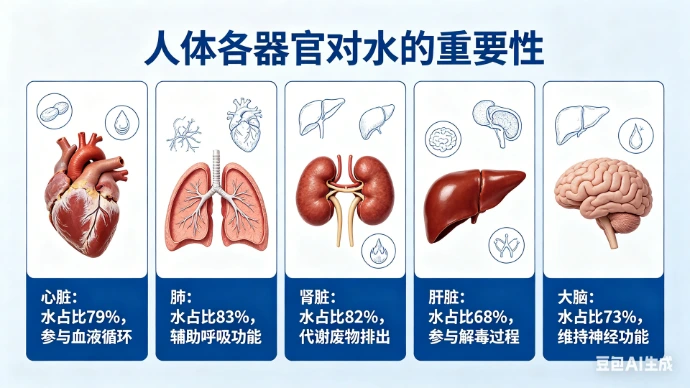
Water is one of the most important nutrients for the human body, accounting for about55% to 75% of adult body weight.It is not only the foundation of life but also plays a key role in several physiological functions:
Maintaining fluid balance and metabolic functions.
Water is the main component of bodily fluids such as blood, digestive juices, and lymph, helping to transport oxygen and nutrients to cells and remove metabolic waste (such as urea and carbon dioxide).
Regulating body temperature.
Through sweating and breathing, the body can effectively dissipate heat and avoid overheating. When dehydrated, the ability to cool down decreases, making it easier to suffer from heat exhaustion or heat stroke.
Lubricating joints and tissues.
Synovial fluid in joints, intraocular fluid, and cerebrospinal fluid all require water to reduce friction and protect joints and nerve tissues.
Promoting digestion and preventing constipation.
Water helps dissolve dietary fiber, soften stools, and maintain smooth intestinal peristalsis. Long-term dehydration is a common cause of functional constipation.
Supporting kidney detoxification.
The kidneys need sufficient water to filter blood and produce urine, expelling toxins from the body. Dehydration increases the risk of kidney stones and urinary tract infections.
Maintaining skin health and elasticity.
Adequate hydration can improve dry skin and flaking, and help maintain the barrier function of the stratum corneum.
Enhancing concentration and physical performance.
Mild dehydration (losing 1-2% of body weight) can lead to headaches, fatigue, decreased attention, and short-term memory loss.